
Multi-level energy storage system for Sonnenhaus 2.0
With the Sonnenhaus 2.0, Horst Zimmermann and his project partner, the ZM3 real estate group, have created a real laboratory in Göfis to conduct applied research in residential construction and explore the “limits of self-sufficiency”.
Our services
Second-life energy storage systems (ESS) represent an important milestone in sustainable energy supply. They use recycled or reused batteries to provide a cost-effective and environmentally friendly storage solution that is becoming increasingly important for both private households and commercial applications. These systems are crucial in bridging the gap between energy production and consumption and contribute significantly to the stability and efficiency of the electricity grid.
The future of home ownership with a sustainable PV and battery storage combination
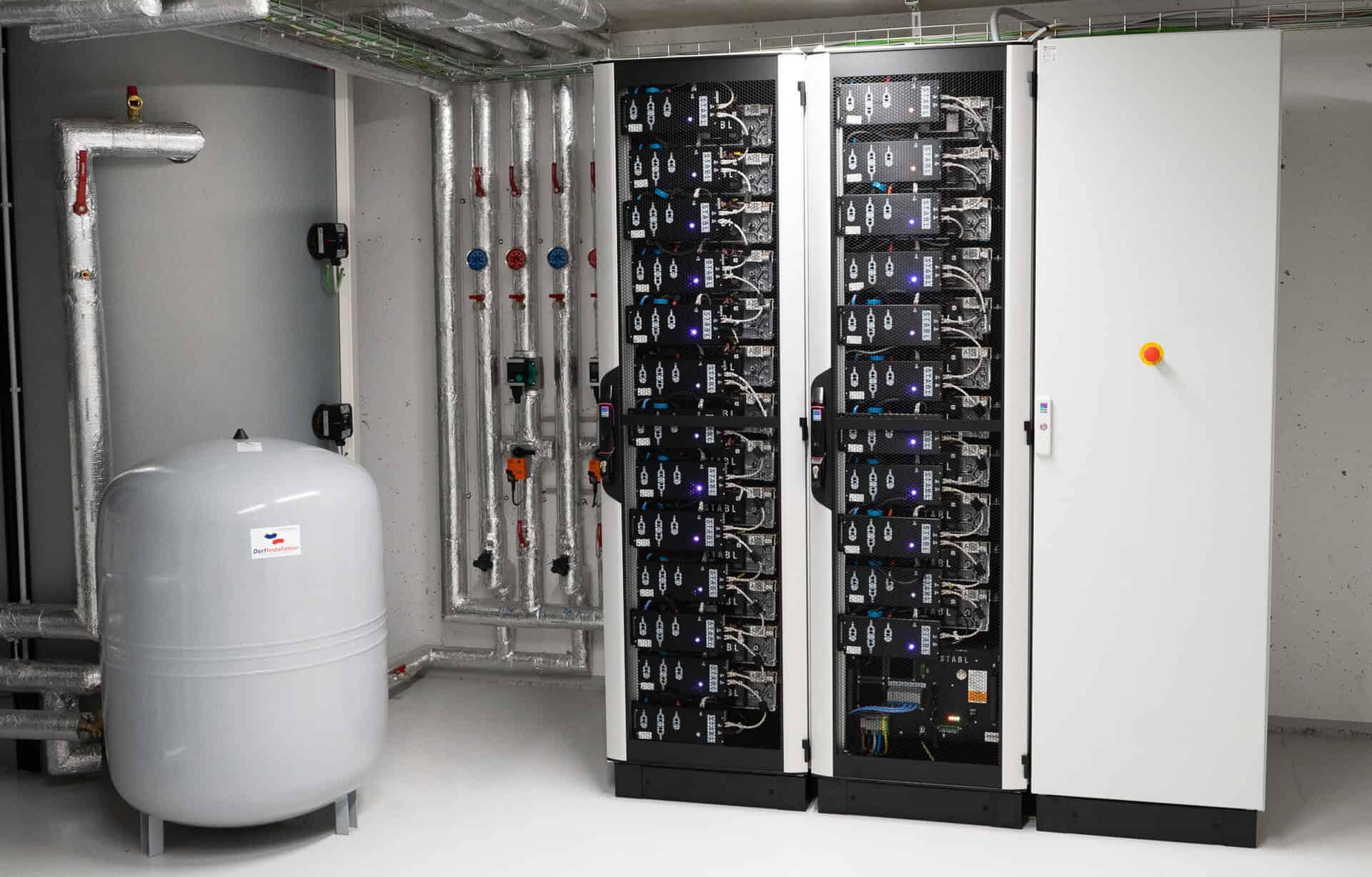
The energy storage system was designed in collaboration with the company ZM3 for Horst Zimmermann in Göfis, Vorarlberg, and integrated into a private building known as “Sonnenhaus 2.0”. Here, a battery storage system is used in combination with a photovoltaic system to optimize the self-consumption of solar power. The key to the efficiency of this project lies in storing the surplus energy produced by the PV system. The installed stand-alone battery storage system with a capacity of 260 kWh and an output of 67.5 kW enables the homeowner to achieve greater independence from external energy sources while maximizing the use of renewable energy.
Project details:
- Storage capacity: 261 kWh (208 kWh usable)
- Extension: Can be extended as required
- Location: Göfis, Austria
- Monitoring: cell voltage, cell temperature, current and passive balancing
- Purpose: Optimizing self-consumption by storing surplus energy from PV
- Degree of self-sufficiency: ~1 day
Furthermore, this project is an excellent example of how innovative energy solutions can help optimize energy efficiency and reduce operating costs. It impressively demonstrates the benefits of second-life ESS in a commercial environment and highlights the importance of sustainable energy sources in modern industry.
All-in complete system
The container is fitted with the individual modules on site at e.battery systems. The container is delivered fully equipped with battery modules. The power storage unit is positioned and electrically installed on site in Sennwald.
The system is based on a 67.5 kW inverter. Additional power can be added by expanding the system with additional modules and containers.
The storage of the future.
Energy storage systems or better known as energy storage systems are the future of efficient energy storage and energy supply. Basically, the system is simple and quickly explained. Energy can be stored via the power grid or preferably via alternative power sources, such as electricity from photovoltaics, and then used again as required.
But why do we actually want to store energy? By storing energy, we can generate power independently of the grid and therefore have access to this energy even in the event of an outage. We can also optimize our own energy consumption by capping peak loads.
The complete control and monitoring of energy consumption, energy sources and the energy storage system works simply via our energy management system.